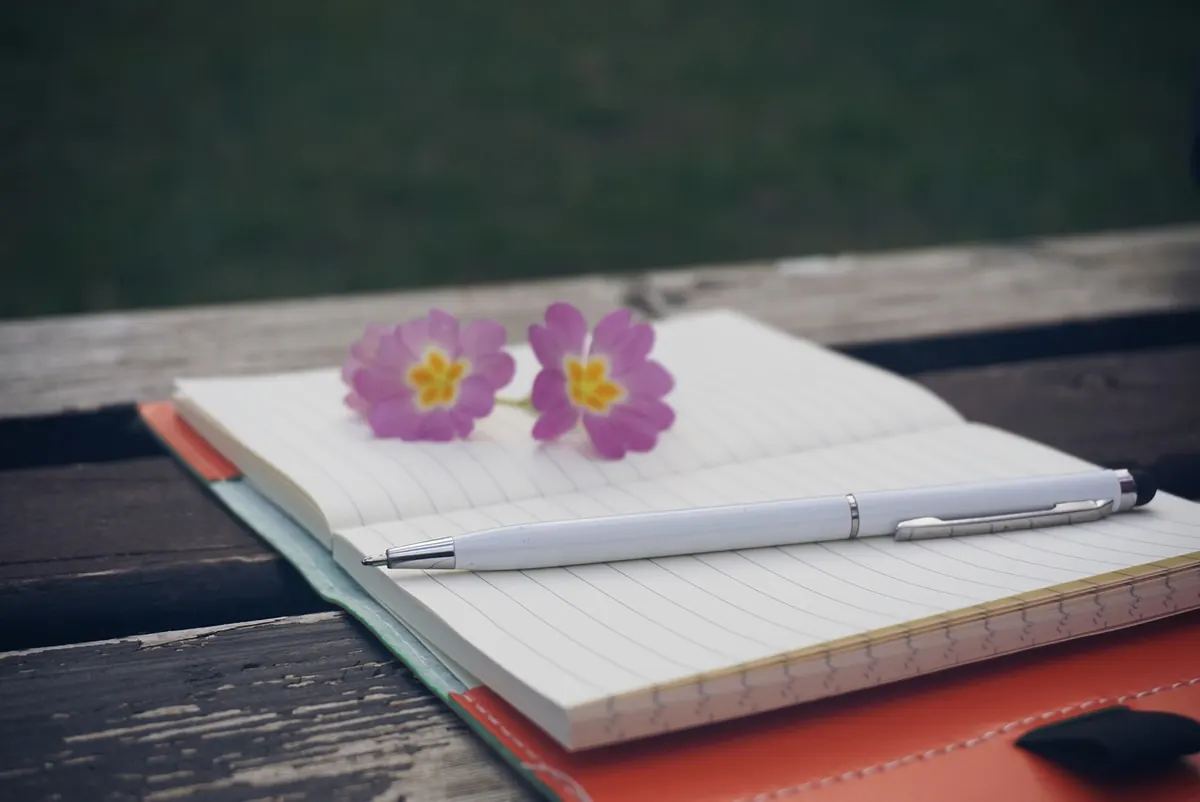
Most writing advice assumes a desk. A room, a window, a chair that fits, a mug within reach. Rural writing rarely stays in one place for long. A morning at the kitchen table with a notebook open beside a cooling cup of tea; an afternoon leaning on a gate or the tailgate of a truck; a walk to the far field where the sentence you have been chasing for a week finally arrives, fully formed, and you have about forty seconds to get it down. Whatever you carry has to work in all three places, and preferably in the rain.
What follows is a comparison of the choices that actually matter, based on the assumption that your kit will travel further than the front door.
Before comparing notebooks, answer three questions honestly. Where do you write most often, and in what posture — seated, standing, kneeling, walking? How much do you write in one go: a line, a page, five pages? And do you keep your notes, or do they exist only to be typed up later?
Someone who jots three lines while leaning on a fence needs a different object from someone who fills four pages at a table and then walks home. The first wants a small book that lives in a coat pocket and survives being sat on. The second wants space, a flat surface, and paper that does not fight the pen. Buying a beautiful hardback journal for pocket notes is how people end up with a shelf of half-empty books and a habit of writing on the back of receipts.
In a shop, every notebook feels good. In a wet field at seven in the morning, most of them disappoint. The differences that matter are few, and they show up quickly once you start carrying one daily.
Two categories deserve a word of their own. Waterproof notebooks made with synthetic paper are genuinely useful in heavy rain: they refuse to turn to pulp, and pencil writes on them beautifully. The trade-off is a slick, slightly waxy surface that makes some inks smear and dries slowly, so test your pen on the actual paper before relying on it. Cheap field books and plain composition books sit at the other end. They cost little, take a beating, and remove the pressure of ruining something expensive. For first drafts scribbled outdoors, that freedom is worth more than good paper.
Start with a pencil. A plain 2B wooden pencil writes when it is cold, writes on damp paper, writes upside down, and erases. It will not leak into your bag or refuse to start after a frosty night. The cost is maintenance: a sharpener, or a pocket knife if you are careful and know how to use one. A mechanical pencil with 0.7mm lead avoids sharpening but snaps more easily when you press hard against a notebook held on your knee.
For ink, a ballpoint is the most forgiving choice outdoors. Standard ballpoints struggle in extreme cold, but a pressurized or pressurized-style refill keeps going where ordinary ink thickens. They work at odd angles, survive being dropped, and dry almost instantly. Gel pens feel smoother and lay down darker lines, but they smudge in damp conditions and empty faster than you expect when you are writing every day.
Fountain pens belong indoors, where they are a pleasure: the glide, the shading, the small ritual of filling. Outdoors they are temperamental. Cold thickens ink, cheap paper feathers, and a nib that has been jostled in a coat pocket can misbehave for the rest of the walk. Fineliners are pleasant for tidy notes but fade noticeably in sunlight, so do not use them for anything you intend to keep on a windowsill.
Two practical notes. If you write left-handed, test drying time on the exact paper you plan to carry; a pen that smears under your hand will ruin a page you cannot easily rewrite. And in cold weather, keep the pen in an inside pocket rather than the outer pocket of a bag. Body heat solves most starting problems.
A working kit should fit in one small pouch and be findable in the dark. These items have proved their worth:
If you carry a pocket knife, check the rules where you live and where you walk; they vary, and a favourite tool is not worth a difficult conversation.
A pocket notebook, one pencil, one ballpoint, in a coat pocket. Best for walks where writing is incidental — a line about the light, a note on where the fence is broken. It fails when you want to work at length, and the small pages fill faster than expected. Keep a second pocket notebook at home so a full one is never a reason to stop.
An A5 notebook in a pouch with two pencils, a ballpoint, a clip, and a zip bag. This is the sensible middle: enough room for a proper page, still light enough to forget you are carrying it. It handles drizzle but not a downpour, so the zip bag is not optional.
A larger A5 or slim A4 notebook, a waterproof notebook for wet days, pencils, a pressurized ballpoint, and a dry bag. It suits a full day out, a survey of a hedge line, or a walk with a specific piece of writing to finish. It is heavy enough that you will notice it, which is the honest trade.
Wind is the more common enemy. A bulldog clip holding the pages against the cover makes more difference than any clever notebook design. Write with the book braced against your body or a knee, not held out flat. In rain, work in pencil, keep the notebook angled downward, and accept shorter sessions. Warm your hands in your pockets before you start; cold fingers produce cramped, spidery handwriting you will struggle to read later.
Then type it up the same day. Memory for a sentence written on a windy hillside is generous for a few hours and unreliable afterwards.
Buy one notebook, one pencil, and one pen. Use them until they are finished or until something clearly fails. Replace the failure, not the whole set. Keep the good paper and the fountain pen at the home desk, where they will be appreciated, and let the field kit be practical and slightly battered. Date your pages, number them if they are not numbered, and keep every filled book in one place.
The best rural desk setup is the one that is already in your pocket when the sentence arrives.
Photo: freephotocc / Pixabay

A practical guide to building vivid scenes, portraying rural people with care, and making setting do real narrative...

A twelve-question checklist for rural essays: verify the facts, sharpen the detail, treat neighbours fairly, and...
A practical, ethical method for gathering village memories — from the first knock on a neighbour's door to a...


Stories and notes from a country scribe.
