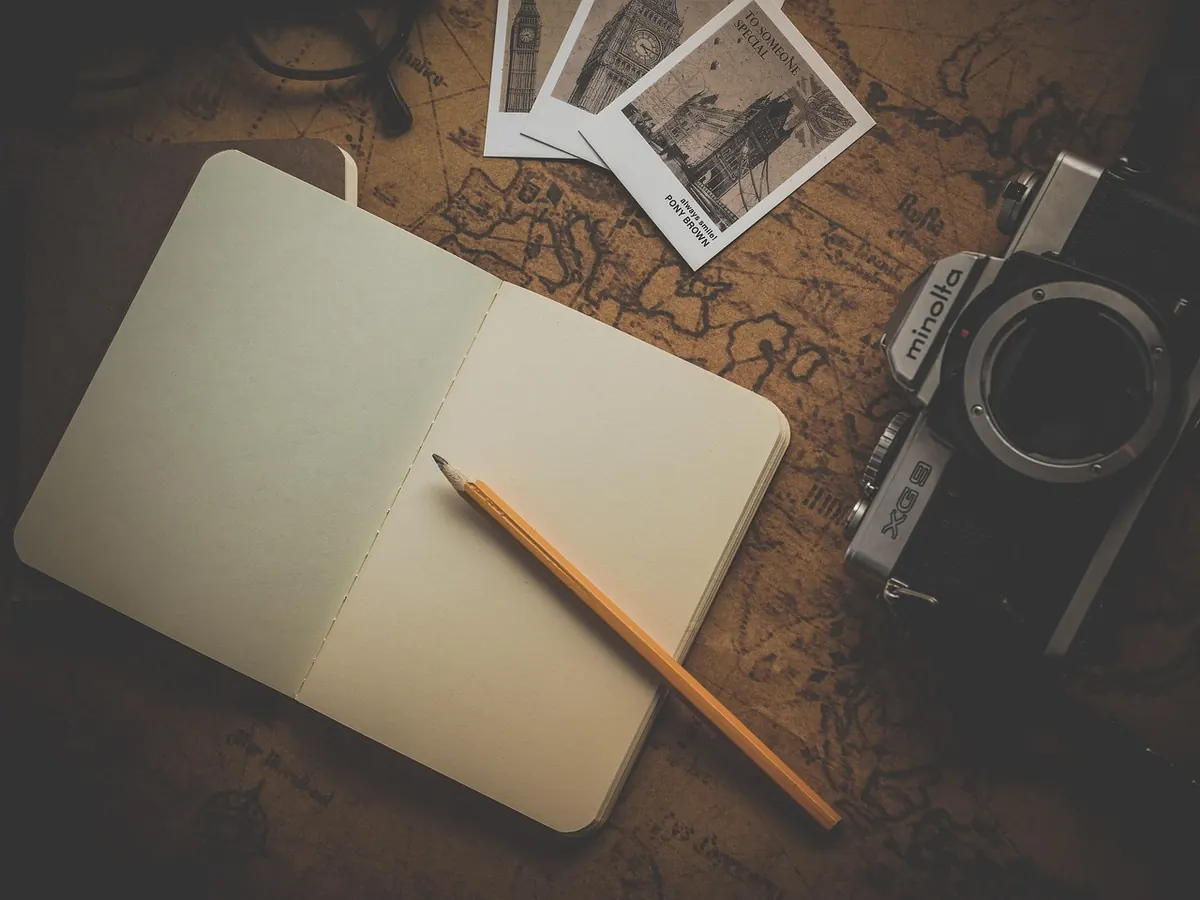
The first time I sat down to record an old farmer's memories, I brought a long list of questions and a cheap notebook. He answered three of them, then pushed the list aside and told me about the night the river took the bridge. I wrote for an hour and forgot half the questions. What stayed with me was the detail about the lantern, and the fact that his mother had wrapped the bread in a cloth before they ran. That is where village memory work begins: not with a questionnaire, but with one person who trusts you enough to keep talking.
This guide sets out a method you can follow in any small town, in a kitchen or a barn or on a bench in the square. It assumes no training, no budget beyond a notebook, and no ambition to become an archivist. It assumes only that you have noticed how much disappears when a generation goes quiet.
Before you knock on a single door, spend an evening with a pencil and a rough sketch of the village as you know it. Mark the places that generated stories: the well, the washhouse, the dairy, the school with two classrooms, the field where the fair was held, the corner where the bus stopped before the road was paved. Under each, write the names of two or three people who might remember it. This is your working map, and it will change as you go.
Then make a short list of themes rather than questions. Good themes for a first round: work, food, water, weather, school, courtship, illness, departure. Emigration, in particular, tends to sit behind half the other stories in a village, and people often want to talk about it once someone asks.
Keep the ambition small. One or two conversations a week is plenty. Memory work is slow, and if you arrive with a plan for a book you will frighten people off before the second cup of coffee.
Ask for a specific hour rather than "sometime". Late morning works well for many older people, after the animals and the shopping, before the afternoon closes the shutters. Offer to come to them. A person's own kitchen is full of prompts — the copper pot, the photograph on the dresser, the calendar from the parish — and they will gesture at these without being asked.
Ask permission before you switch anything on, and explain in one sentence where the recording will go. A phone on the table is fine. Place it slightly to one side rather than between you, and check the battery before you arrive. If the person is uncomfortable being recorded, write notes instead and say so out loud; visible note-taking is itself a form of respect, and people will slow down for it.
Resist the urge to fill silences. Count to five before you speak again. Most of the good material arrives in the pause after someone has finished their answer. Nod, keep your eyes on them, and let your follow-up question be a small echo of their last phrase: "You said the priest came down himself." That kind of echo tells them you are tracking the story, and it keeps them inside it.
Avoid correcting dates in the moment. If someone says the flood was in 1951 and you know it was 1953, write yourself a note and let the story run. Accuracy matters, but it can be checked later; a broken thread is much harder to repair.
Open questions work better than anything that can be answered with a yes. Try these as starting points and follow wherever they lead.
Keep two or three of these in your head, not in your hand. Reading questions from a page turns a conversation into an interview, and an interview into a form.
People tell you things they have not told their own children. Treat that as a loan, not a gift. Agree at the start what you intend to do with the material, and say plainly that they can strike anything out afterwards. If a story involves a living person in an unflattering way, or a family quarrel that is still warm, the decent choice is usually to leave it out or to anonymise it. Ask before you publish photographs, and ask again when the piece is written, because people change their minds about what they want remembered.
Write down names, places and dates as they are given, then verify the ones you intend to print against a second source — a parish record, a local history, another relative. Say "I'm not sure of the year" in the final text if you are not sure. A small honest gap is more convincing than false precision.
An hour of recording becomes a piece of three hundred to six hundred words. That is the right size for a village memory: long enough to hold a scene, short enough to read aloud at a table.
There is a difference between a transcript and a story, and the distance between them is mostly rhythm. Move sentences around, cut repetition, drop the fourth mention of the same cousin. Keep the dialect words that carry a thing no English phrase quite holds — a paiolo, an aia, the name of a local cheese — and gloss them once, briefly, in context. Do not smooth out the grammar into something no one in the village would say. The reader came for a voice, not for your prose.
Short paragraphs help. So does one concrete object per section: the chipped basin, the bicycle with no brakes, the key kept on a nail. Objects are easier to remember than arguments, and they give a reader somewhere to stand.
Choose one person, one afternoon, three questions. Take a notebook and a phone with a full battery, arrive on time, and stay an hour. Type it up the same evening while the sound of the kitchen is still in your head, even badly, even in fragments.
That single recording is the whole method in miniature. If it goes well, you will know who to ask next, and the map on your table will start to fill itself in. Villages are not short of memories. They are short of people willing to sit still and write them down.
Photo: DariuszSankowski / Pixabay
A practical guide to building vivid scenes, portraying rural people with care, and making setting do real narrative...

A twelve-question checklist for rural essays: verify the facts, sharpen the detail, treat neighbours fairly, and...

A practical, step-by-step method for turning a season of messy field notes into a finished rural essay — sorting,...

Stories and notes from a country scribe.
