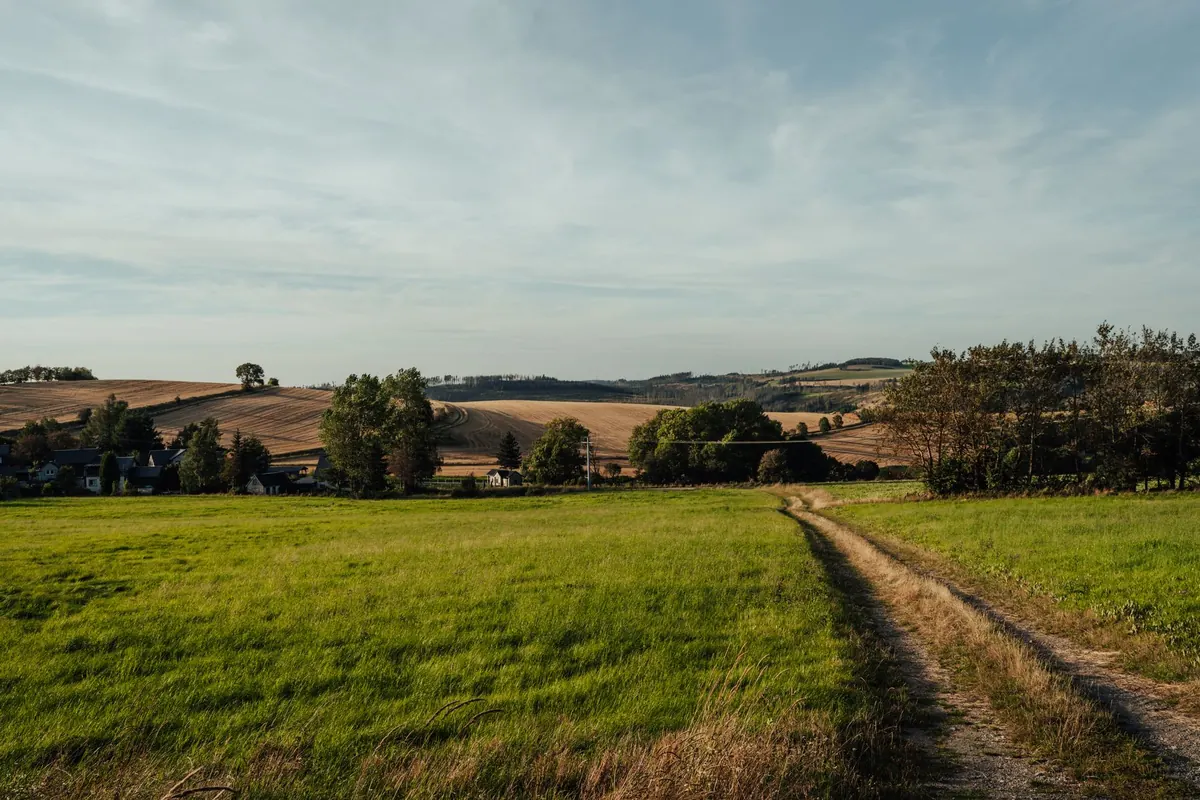
The first description I ever read of the valley where I now live ran to four sentences and used the word nestled twice. The hills were rolling. The church bells were ancient. In the middle distance, an unnamed farmer was tending his flock. I had been living there for a year by then, long enough to know that the farmer was called Ilvo, that he kept goats rather than sheep, and that he had spent most of that particular morning swearing at a blocked water pump. The description was not false. It was simply useless. Not one sentence in it could have been written about anywhere else in the world, and not one sentence could only have been written about here.
Almost every rural essay starts with the same nervous gesture: the writer reaches for scenery. Hills must roll. Villages must nestle. Light must be golden, lanes must be winding, and somewhere a church bell has to be old enough to be described as ancient.
This is not laziness, exactly. It is a reflex learned from a century of travel writing, property brochures and caption copy. It comes from a real feeling — the genuine pleasure of finding a place beautiful — and then traduces that feeling into a shopping list of approved adjectives. The result reads warmly and means nothing.
Here is the test I apply to my own drafts. Cover the proper nouns. If the sentence could describe six hundred other villages, it is not description. It is atmosphere, and atmosphere is cheap.
Certain phrases appear so reliably in rural writing that they have stopped functioning as language. Keep a list of yours and hunt them down in every draft:
Each of those phrases is a shortcut to a feeling the writer has not earned on the page. “Sleepy” means I found it restful. “Unspoilt” means I approve of what is missing. Fine — but say the feeling through a detail that produced it. A bench with three people on it at eleven in the morning. A shop that opens four days a week and closes for the grape harvest.
Writers often answer the cliché problem by going bigger: more history, more landscape, more lyricism. The better move is smaller. Precision does the work that adjectives are asked to do and fail at.
Before: The ancient stone farmhouse nestled among rolling hills, its weathered walls a testament to a simpler time.
After: The farmhouse has two front doors and no hallway, because the family that built it kept cattle in the left half until 1968. The lintel over the right door is scorched. Nobody remembers why.
Nothing in the second version is decorative, and yet it holds a whole social history. What changed? Names, dates, numbers, and one unresolved detail that invites the reader to stay.
Before drafting, walk the place with a notebook and list thirty concrete nouns: tools, plants, containers, sounds, makes of vehicle, breeds of animal, bits of infrastructure. Do not judge them. Then choose three. The discipline is in the choosing — a page of undigested local vocabulary is just a different kind of showing off.
Watch for the research dump. A paragraph that explains the history of a breed or a building is only worth its length if the information presses on someone in the scene. Otherwise it belongs in your notes, where it can keep you company.
Picturesque writing flattens places into harmony. Real places are contested. There is a planning application, a quarry, a second home, a footpath dispute, a bus route quietly reduced to twice a week. There is also ordinary nuisance: slurry, mud, machinery at five in the morning, the neighbour’s dog.
I do not mean that every rural essay must be an argument. Friction can be as small as discomfort. The wind that makes conversation impossible at the top of the field. The midges. The three-mile drive to buy milk. A writer who admits inconvenience is a writer the reader can trust with the beauty.
Be careful with grievance, though, especially when it involves people who live near you. A place is not a backdrop for your opinions about it, and the people in your essay have to go on living there after publication.
The rural essay has a stock character problem. Farmers appear as taciturn sages; older women appear as repositories of folklore; young people appear only as a question about whether they will stay. All of them are decorative. None of them is a person.
Two habits help. First, record ordinary speech rather than profound speech: the practical aside, the complaint about a van, the half-sentence that goes nowhere. Second, let people be wrong, funny, bored or contradictory, and do not tidy them into wisdom.
Do think about consent. If a conversation is likely to appear in print, ask whether you can use it and whether the speaker wants their name on it. Changing a name and a detail or two is usually enough in a personal essay; it is not enough if the piece could harm someone’s reputation or livelihood. If you are describing identifiable people in a way that carries risk, get proper advice before publishing.
Set aside twenty minutes and read your draft with a pen. Ask these questions of every paragraph that describes place:
Then read the piece aloud. Clichés are audible in a way they are not visible; the ear catches “nestled” long before the eye does. A description that survives this pass will be narrower, stranger and less comfortable than the postcard version, and it will be the only one your reader could not have written themselves.
Photo: Levent Simsek / Pexels

A practical guide to building vivid scenes, portraying rural people with care, and making setting do real narrative...

A twelve-question checklist for rural essays: verify the facts, sharpen the detail, treat neighbours fairly, and...

A practical, ethical method for gathering village memories — from the first knock on a neighbour's door to a...


Stories and notes from a country scribe.
